Compassionate Estate Clearances in Highgate: A Guide for Families and Executors
“Rubbish removal” is no longer a simple matter of throwing unwanted items into a truck and driving them away. In 2026, it operates within a tightly regulated, data-driven framework shaped by environmental targets, landfill taxation, and the UK’s commitment to the Circular Economy.
Today’s waste industry must balance compliance, cost efficiency, recycling performance, and transparency. For households, landlords, construction firms, and businesses, understanding how rubbish removal works has become essential, not optional. Below is a complete overview of how the system now functions.
The “Simpler Recycling” Revolution (2025–2026):
The UK government’s Simpler Recycling reforms have fundamentally reshaped how waste is separated and collected. The objective is standardisation: no more postcode lottery where councils follow different rules. Instead, a consistent framework is being introduced nationwide.
The Four-Stream Rule

Most premises must now separate waste into at least four core streams:
| Waste Stream | What It Includes | Key Requirement |
| Dry Recyclables | Glass bottles, tins, cans, rigid plastics | Must be clean and uncontaminated |
| Paper and Card | Cardboard, office paper, newspapers | Often required to be kept separate from other recyclables |
| Food Waste | All biodegradable food scraps | Mandatory weekly collection for homes from March 31, 2026 |
| Residual Waste | Non-recyclable black bin waste | Minimised wherever possible |
By 2027, plastic film (bags and soft wrapping) will also become a mandatory recyclable stream across the UK.
The biggest shift is contamination control. Mixed recycling that once seemed convenient is now more carefully monitored. Businesses especially face stricter enforcement and potential penalties for non-compliance.
Types of Rubbish Removal Services
In 2026, rubbish removal is delivered through three main service models, each suited to different needs and budgets.
Man-and-Van (Wait-and-Load)
This is now one of the most popular alternatives to skip hire, particularly in dense urban areas.
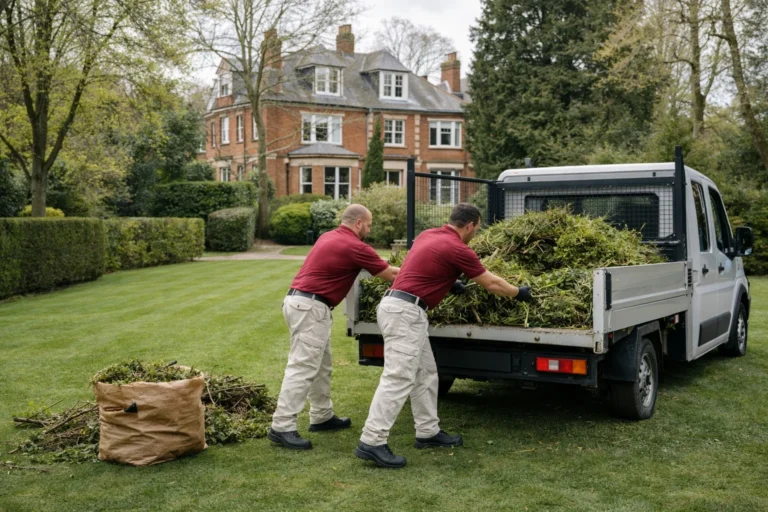
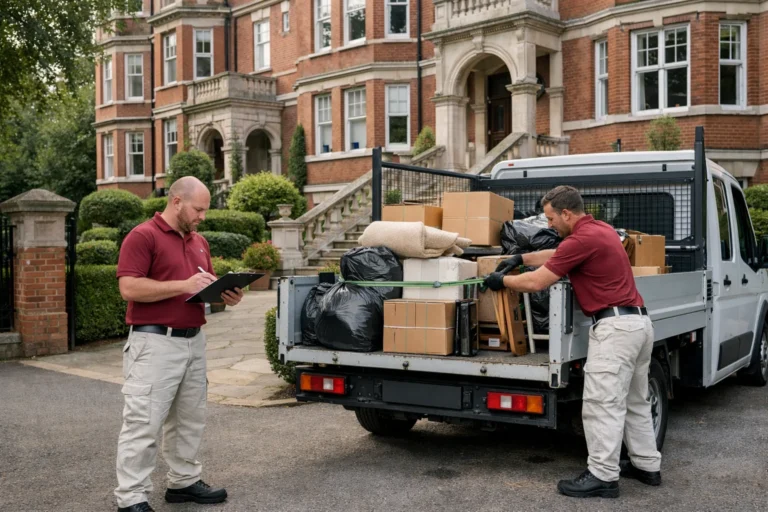
A professional team arrives in a boxed van, loads the waste directly from your property, and removes it immediately. There is no need for a skip permit, and the labour is included.
This option is particularly effective in boroughs with controlled parking zones or limited driveway space. It is ideal for bulky furniture, garden clearances, probate clear-outs, and renovation waste where speed and convenience matter.
Skip Hire
Skip hire remains the traditional method for large volumes of heavy construction debris.
However, in 2026, costs have risen sharply due to council permits and parking suspension charges. In London, once you include permit fees and extended hire periods, a single skip can exceed £400.
Skip hire works best for ongoing DIY or building projects where waste accumulates gradually over time.
Commercial Waste Management
For shops, restaurants, offices, and warehouses, waste management is an ongoing contractual obligation.
Businesses must:
- Use a licensed waste carrier
- Retain Waste Transfer Notes (WTNs) for a minimum of two years
- Comply with Simpler Recycling separation requirements
Modern providers now integrate Digital Waste Tracking systems, offering real-time data dashboards that show recycling percentages and contamination levels. For businesses, this data is becoming part of ESG reporting and sustainability audits.
The Financial Reality: Why Costs Have Increased
Many customers are surprised by rising rubbish removal prices. The reasons are structural and policy-driven.
Landfill Tax
As of April 2025, the UK Landfill Tax increased to £126.15 per tonne. This makes disposing of waste at landfill sites extremely expensive. The tax is designed as a deterrent, forcing companies to divert materials into recycling streams.
Recycling Gate Fees

Recycling centres charge “gate fees” to process materials. Although typically cheaper than landfill, these fees have risen as facilities invest in advanced sorting technology, robotics, and contamination screening systems.
The combined effect is simple: disposal is expensive, and responsible recycling requires infrastructure. Those costs are reflected in service pricing.
Essential Terminology in 2026
Understanding key waste management terms protects you legally and financially.
| Term | Meaning | Why It Matters |
| WEEE | Waste Electrical and Electronic Equipment | Items with plugs or batteries require specialist recycling |
| Duty of Care | Legal obligation to ensure waste is handled lawfully | You remain liable if your waste is fly-tipped |
| Circular Economy | Keeping resources in use as long as possible | Repair → Reuse → Recycle model |
| Hazardous Waste | Fridges, chemicals, paint, asbestos | Requires licensed specialist collection |
Duty of Care is particularly important. If an unlicensed collector illegally dumps your waste, enforcement authorities may trace it back to you.
How to Choose a Rubbish Removal Partner in 2026
With tighter regulations and higher costs, choosing the right provider is critical.
Always verify that the company holds a valid Environment Agency waste carrier licence and can issue Waste Transfer Notes for every load removed. This documentation is your legal protection.
It is also wise to choose a provider that understands local parking rules and controlled zones, particularly in boroughs with strict enforcement. Transparent pricing, clear recycling policies, and documented disposal routes should be standard.
For residents seeking compliant and professional support, trusted rubbish removal services in Highgate like us can provide structured collection, responsible recycling, and full legal documentation in line with 2026 regulations.
The Bigger Picture: From Disposal to Resource Management

The most significant shift in 2026 is philosophical. Rubbish removal is no longer about disposal; it is about resource recovery.
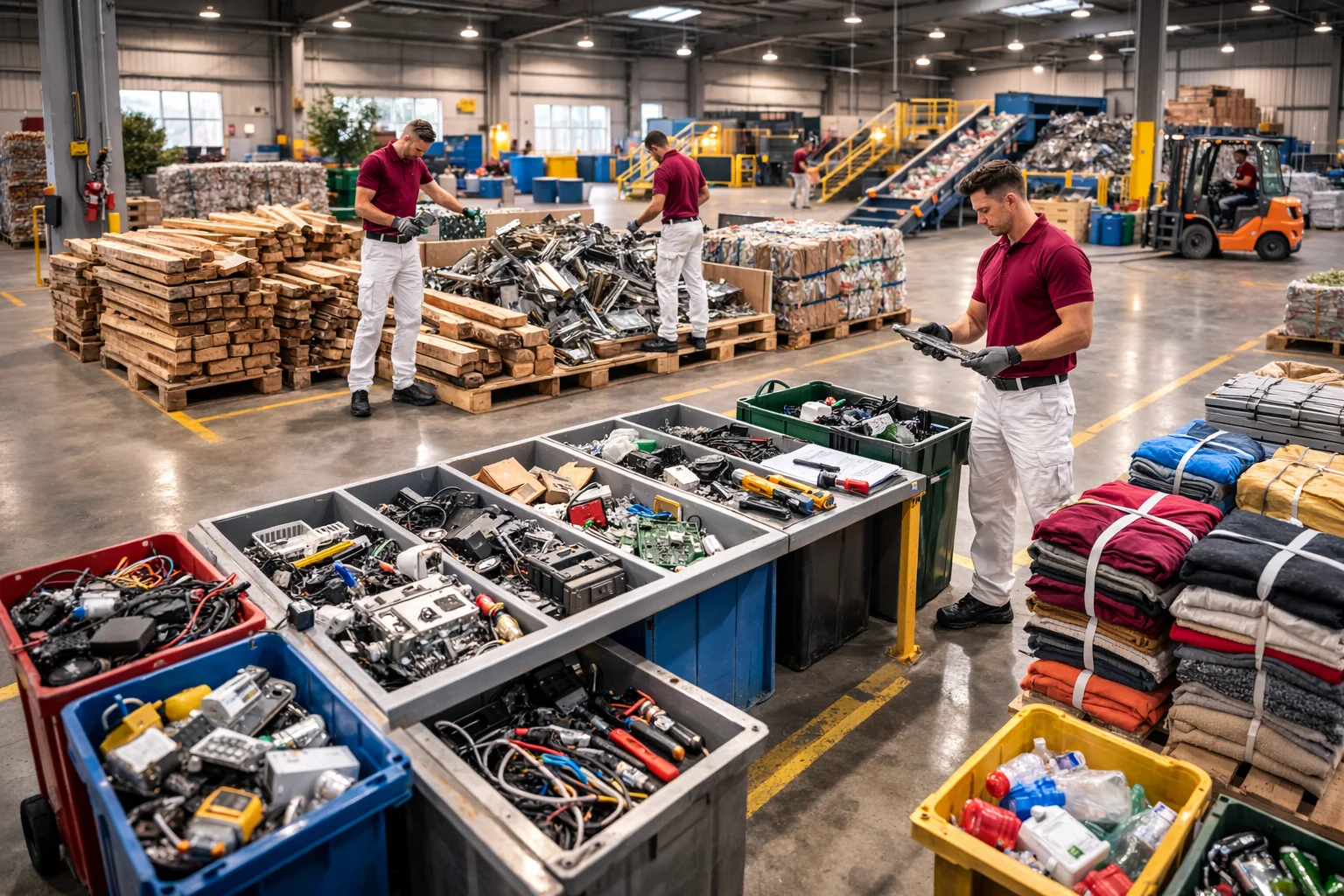
Materials once considered waste are now seen as assets within the Circular Economy. Wood becomes biomass fuel, metals are melted and reused, textiles are repurposed, and electronics are stripped for valuable components.
For households and businesses alike, the takeaway is clear: rubbish removal has evolved into a compliance-driven, environmentally accountable service shaped by legislation and economic incentives.
Understanding how it works empowers you to make informed decisions, stay within the law, and contribute to a more sustainable system even when you are simply clearing out unwanted items.